


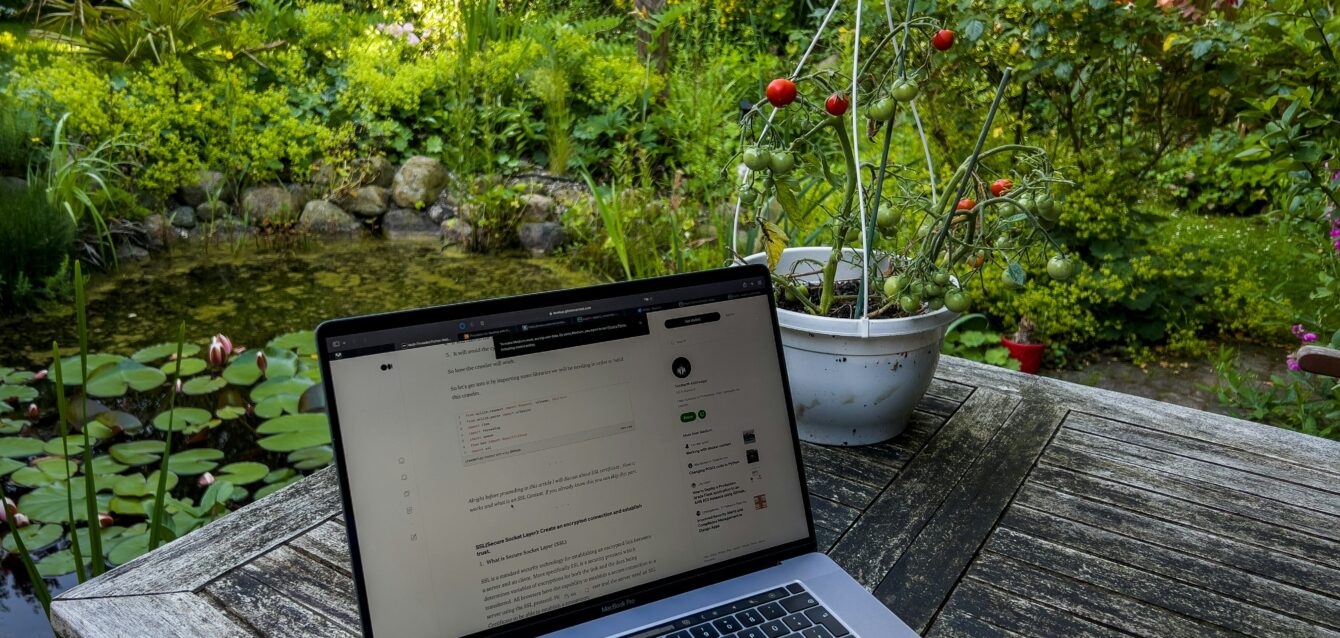
No walk in the garden is complete without snapping pictures of flowers, trees, herbs, and weeds to identify them. So, in this article, we are going to discuss the top 7 plant identification apps for 2025 that carry features, accuracy, and a friendly interface.
Best Plant Identification Applications in 2025
The following are some of the most reliable plant identification apps that prevail this year with their performance, accuracy, and ease of use.
Best Plant Identification Apps in 2025
1. PlantSnap
PlantSnap is among the world’s most popular plant identification applications and digital solutions, identifying more than 600,000 species of plants, trees, cacti, mushrooms, and others. The user takes an adequately clear picture of the plant, and the AI (Artificial Intelligence) processes it to return detailed information such as botanical names, classification, habitat data, and care instructions. It has a vast global database and multilingual support, which makes it especially helpful for users outside the U.S. In addition, PlantSnap offers an offline mode in the premium category.
Strengths: Global database, real-time identification, and offline functionality.
Best For: Amateur botanists, travelers, and students.
2. PictureThis
A nice combination of a friendly website design and a powerful database. A single photo locates species numbering in thousands, along with some handy options: care tips, watering schedule, health status, the detection of pests, and diseases. Expertly based content is implanted in the constant updates of the app to keep increasing both its botanical knowledge base and scientific accuracy.
Strengths: Beautiful UI, High accuracy in identification, Helpful disease detection features.
Best For: Home gardeners and hobbyists seeking to keep their plants in good health.
3. PlantNet
PlantNet is a plant identification software that is somewhere halfway between crowd-sourced and scientific collaboration: users submit photos that can be verified and stored in the ever-enlarging database. Unlike the commercial application that deals with care for the plant, this one focuses strictly on identifying the species, taxonomy, and biodiversity tracking. It covers every kind of plant, including wildflowers, trees, grasses, and vines, mostly for ecological fieldwork and conservation.
Strengths: Heavyweight scientific credibility, crowd-sourced data, ecologically oriented projects.
Best For: Conservationists, Teachers, Biology Students.
4. iNaturalist
iNaturalist does more than plant identification; it is a full-fledged citizen science platform for observations of all living organisms. Established by a worldwide community of experts. By sharing their observations, users actively contribute to research projects on biodiversity, data that eventually integrates into worldwide research endeavors and scientific databases.
Strengths: Community-powered, data shared with scientists, support for all living organisms.
Best For: Hikers, outdoor explorers, and academic researchers.
5. Seek from iNaturalist
Seek is the family-friendly adjunct to iNaturalist, meant to be geared toward a younger audience and for beginners. Kids and adults alike surely get an equally easy experience as they set off on discovering and identifying plants and animals while earning badges and completing challenges that nurture further curiosity among this young generation. It employs the same powerful AI as iNaturalist, which is, however, not based on user registration.
Strengths: No signing in is needed, it is privacy-friendly, and it is fun for young people.
Best for: Parents, teachers, and budding explorers.
6. LeafSnap
LeafSnap was prepared originally by Columbia University, the University of Maryland, and the Smithsonian Institution. It works to find tree species. Grounded in academic theory and with a magnificent working design, it stands a good chance of correctness when native trees in North America are concerned: snap a shot of a leaf, and with the cross-reference of the app with its database, some suggestions pop up along with botanical names and relevant pictures.
Strengths: Academic background, leaf recognition, and high-resolution pictures.
Best for: Forestry professionals and nature photographers.
7. Flora Incognita
Developed by scientists from Germany’s Technical University of Ilmenau and the Max Planck Institute, Flora Incognita offers an ad-free, machine-learned, reliable plant identification system across Europe and North America. Unlike some apps, which deliver general-purpose data, Flora Incognita contains regionally accurate species and regularly updates its taxonomy. The app also helps educate about the habitat, conservation status, and ecological relevance of plants.
Strengths: Ad-free, reliable AI model that is used in environmental research.
Best for: Ecologists, students, or plant enthusiasts in need of deep study.
How to Choose Among the Plant Identification Apps
1. Accuracy and Database Size
Apps like PlantSnap and PictureThis have larger global plant databases. Updates should be frequent, and data submitted by users is preferred.
2. Use Without Networks
Going offline is the trick for getting out to your field sites. Hence, you must have plant libraries: PlantSnap and LeafSnap will let you download those libraries for offline use.
3. Community and Support
The evidence quality gets verified by community members on platforms such as iNaturalist, and community members may even participate in ongoing research; if community engagement means something to you, look for such an app.
4. Educational Features
If you want a gamified experience or detailed content to learn more about plants with a family or school group, then Seek and Flora Incognita are perfect.
5. Integration with Other Tools
Some apps synchronize with your garden care calendar while giving you clues about pest control, watering, and lighting, making them ideal all-in-one apps.
With the world shifting more toward digital solutions and nature awareness, plant identification apps act as bridging technologies between similar fields. With AI and data generated by users, these programs make studying plant life easier than ever. From caring for your houseplants, identifying unfamiliar weeds, and teaching your kids, these lists offer the top tools of 2025. Now pick the app that suits you, and start exploring the world one plant at a time!