
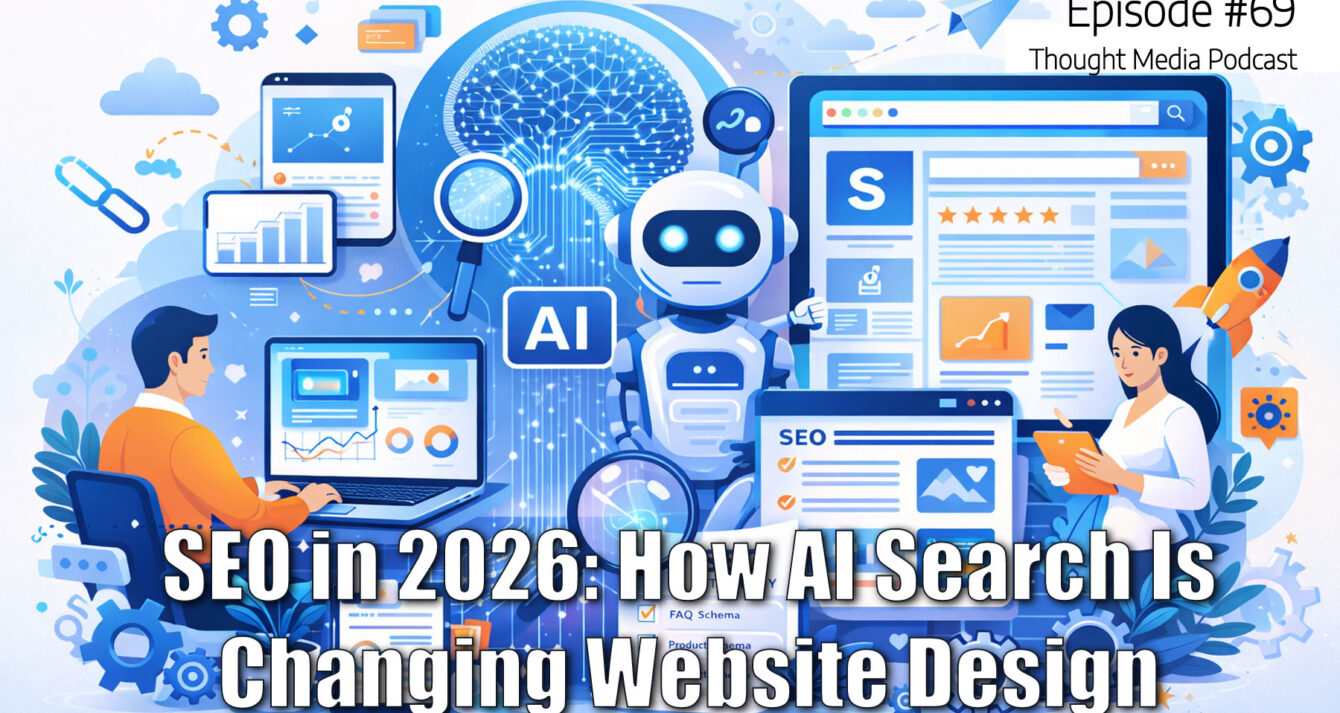


SEO in 2026 and How AI Search Is Changing Website Design and Development Strategy
Search engine optimization is undergoing its most significant transformation in two decades. In 2026, search is no longer defined solely by keyword rankings and blue links. AI-powered systems like ChatGPT, Gemini, Copilot, Grok, and other generative search engines are reshaping how information is discovered, summarized, and recommended.
For businesses, this shift has major implications. SEO is no longer just about ranking on page one — it’s about being understood, trusted, and cited by AI systems.
And that changes how websites must be designed.
The Shift From Keyword Matching to Context Understanding
Traditional SEO focused heavily on keywords, backlinks, and technical optimization. While those elements still matter, AI search engines interpret content differently. Instead of scanning for keyword density, they evaluate context, intent, structure, and authority.
AI systems are trained to answer questions directly. That means they prioritize:
-
Clear explanations
-
Logical content structure
-
Authoritative sources
-
Concise summaries
-
Structured data
Websites built purely for keyword manipulation are increasingly ignored. Websites built for clarity and usefulness are gaining visibility.
Why Website Structure Now Matters More Than Ever
AI systems extract and summarize information from pages. If your content is disorganized, vague, or difficult to parse, it becomes less likely to be referenced in AI-generated responses.
Modern website design must emphasize:
1. Clear Heading Hierarchy
Logical H1, H2, and H3 structures help AI understand topic relationships.
2. Scannable Sections
Short paragraphs, bullet points, and defined sections improve extractability.
3. Direct Answers to Questions
Pages that naturally answer common user queries are more likely to appear in AI summaries.
4. Internal Linking
Strong internal architecture signals topic authority and content depth.
In short, structure is now strategic.
Schema Markup Is No Longer Optional
Structured data has moved from “nice to have” to essential.
Schema markup helps search engines and AI models interpret what your content represents. Whether it’s a service page, product listing, FAQ, article, or organization profile, structured data provides machine-readable clarity.
In AI-driven environments, structured content is easier to cite, summarize, and surface.
Businesses that neglect schema are leaving visibility on the table.
Authority Signals Are Becoming Critical
AI search models are increasingly evaluating credibility.
This includes:
-
Backlink quality
-
Brand mentions
-
Consistent business information
-
Content depth
-
Domain authority
-
Cross-platform consistency
AI systems synthesize information across the web. If your brand lacks consistency or credibility signals, it becomes less likely to be surfaced as a trusted source.
This means digital PR, high-quality content marketing, and authoritative positioning are more important than ever.
Content Depth Beats Thin Pages
Thin content pages that exist purely for keyword targeting rarely perform well in AI environments. AI models prefer comprehensive resources that thoroughly address a topic.
In 2026, strong SEO pages often include:
-
Strategic overviews
-
Detailed explanations
-
FAQs
-
Supporting data
-
Contextual insights
-
Clear conclusions
Depth signals expertise. And expertise signals trust.
Performance Still Matters
Even in an AI-driven world, technical performance remains foundational.
Fast-loading, mobile-optimized websites improve:
-
Crawl efficiency
-
User engagement metrics
-
Bounce rates
-
Core Web Vitals
-
Conversion performance
AI systems may summarize content, but users still click through. And when they do, performance impacts trust and conversion.
Website speed is no longer just a ranking factor — it’s a credibility factor.
Conversational Optimization Is Emerging
One of the biggest changes in 2026 SEO is conversational intent.
Users now phrase queries more naturally:
-
“What’s the best SEO strategy for small businesses?”
-
“How should I structure my website for AI search?”
-
“Why isn’t my website showing up in ChatGPT results?”
Pages that mirror this natural language pattern — without sounding robotic — perform better in AI-driven environments.
This doesn’t mean stuffing content with awkward question phrases. It means structuring content around real human intent.
Website Design Must Support AI Visibility
Design and SEO are no longer separate disciplines.
Modern websites must:
-
Include strong page summaries
-
Highlight key takeaways
-
Use clear navigation structures
-
Feature organized service breakdowns
-
Maintain clean URL architecture
-
Implement technical SEO properly
Design influences how content is interpreted — not just how it looks.
A beautifully designed website that lacks structure, clarity, or authority signals may struggle in AI search environments.
The Risk of Ignoring AI Search
Some businesses assume AI search will replace traditional SEO entirely. Others ignore it altogether.
Both approaches are risky.
Traditional search still drives traffic. But AI discovery is growing rapidly. Businesses that optimize for both environments gain compounding visibility.
Those that ignore AI discoverability risk being invisible in emerging search interfaces.
Thought Media’s Approach to SEO in 2026
At Thought Media, we design websites that perform in both classic search engines and AI-driven discovery systems.
Our approach includes:
-
Structured content architecture
-
Advanced schema implementation
-
Authority-building strategies
-
Technical performance optimization
-
Conversational intent alignment
-
Strategic internal linking
SEO in 2026 is not about gaming algorithms. It’s about building structured, authoritative digital assets that AI systems can understand and trust.
The future of search is not human versus machine. It’s human expertise amplified through intelligent systems.
And the websites that win will be the ones built with that future in mind.