



Cheap web design is one of those things that sounds amazing in theory. It’s like seeing a sign that says “Luxury Condo For Sale: $12.” Your brain wants to believe it, your wallet starts smiling, and then your gut whispers, “Something is… off.”
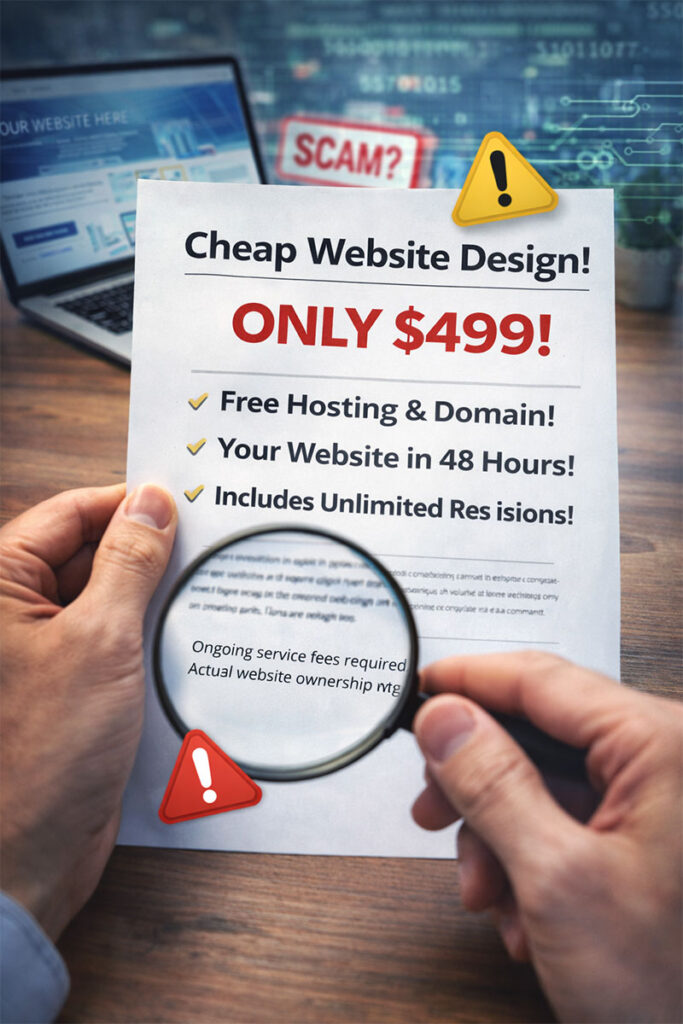
To be clear, not all cheap website design is a scam. Some budget options are totally fine, especially if you’re just getting started. But there’s a big difference between “affordable” and “you’re about to pay $499 for a website that actively harms your business.”, or “you’re about to pay $899 for a website and custom logo to a company with terrible reviews noting them as scammers.”
So let’s answer the question honestly. Is cheap web design worth it, or are you about to waste more money than you thought, or worse – get scammed?
What People Usually Mean by “Cheap Web Design”
Most of the time, “cheap web design” means one of these: It’s a template site built on a website builder with minimal customization. It’s a “package deal” where you pay a low fee and get a site in a few days. It’s a freelancer offering a low rate to build a quick site. Or it’s a company offering an incredibly low price that sounds too good to be true.
The key issue is not the price. The issue is what you’re actually getting and whether the website will help your business.
A cheap website can still be a good website if it is built cleanly, loads fast, works on mobile, and makes it easy for customers to contact you or buy from you.
A cheap website becomes a problem when it looks unprofessional, loads slowly, breaks frequently, or leaves you invisible online.
 When Cheap Web Design Can Actually Be Worth It
 When Cheap Web Design Can Actually Be Worth It
Let’s be fair. There are times when going cheap makes sense. If you’re a brand-new business and you just need a basic presence online, a simple site can be enough. If you’re validating an idea, launching a side project, or testing a new offer, you don’t need a $20,000 custom build.
If your business needs are very simple, like a one-page site with your services, contact info, and a booking button, a low-cost build can be totally reasonable. Even a well-structured template can do the job if it is implemented properly.
The best “cheap” web design is usually the kind that stays simple on purpose. No unnecessary features, no fancy animations that slow it down, just clean design and clear information. Affordable can work when the scope is realistic.
When Cheap Web Design Becomes a Scam or a Disaster
Here’s where things go sideways. Cheap web design often turns into a scam when the low price is used as bait and the real cost shows up later in the form of hidden fees, missing ownership, or a website that is basically unusable. Common “cheap web design” disasters include:
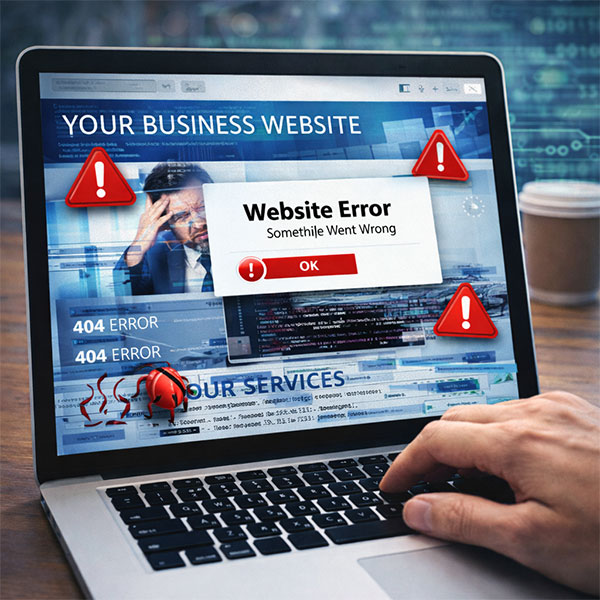
The website looks like a generic template with your logo pasted on it. The site is not mobile-friendly and half the content is cut off on phones. Pages load slowly because images were not optimized. The site has no SEO structure, so you don’t show up on Google. The contact form breaks and you don’t know it, so you lose leads quietly for months. Or worst of all, you don’t actually own the website and you cannot access the backend unless you keep paying the designer.
That last one is a big deal. If someone controls your hosting, your domain, and your admin logins, you are not buying a website. You are renting your own business identity from a stranger. That is not a deal. That is a trap.
Red Flags That You’re About to Get Scammed
If you remember nothing else, remember these red flags: If the price is extremely low and they refuse to explain what’s included, that’s a problem. If they promise a full custom website in 24 to 48 hours, that’s also a problem, because good work takes time. In many cases cheap web design companies and scammers will also have a templated proposal that includes the earth, sun, and the moon for practically nothing. A simple rule to follow is if it’s too good to be true, it often is. Our team at Thought Media™ often hear from individuals receiving cheap web design and website development quotes that look extremely suspicious, and upon looking into the cheap web designer or company (du-diligence) we see many awful reviews or reports of people being scammed.
If you ask who owns the website and they dodge the question, walk away. If you ask for real portfolio links and they only show screenshots, be cautious. If the contract is vague or nonexistent, also be cautious.
And if they are pushy, aggressive, or use pressure tactics like “this deal expires today,” just know that professional agencies do not operate like late-night infomercials.
The Hidden Costs of Cheap Web Design
Even if the cheap website is not a scam, it can still cost you more long-term. Because eventually you might, and more than likely will need to fix it.
A cheap site that is poorly built often requires a full rebuild later. That means you pay twice. You also lose time. You might lose SEO progress. You might lose credibility with customers who landed on your site and thought, “Nope, not trusting this.”
Cheap websites can also cost you money indirectly. If your site is slow, fewer people convert. If the design looks untrustworthy, fewer people contact you. If your site is not optimized for search, you rely more on paid ads to get traffic.
So yes, a cheap website can be cheap. But it can also become expensive in the ways that matter most.
What to Ask Before You Pay for Cheap Web Design
If you’re considering a low-cost web design offer, ask these questions before you agree to anything: What platform will the site be built on? Will it be mobile-friendly and responsive? What pages are included? Is basic SEO setup included, like page titles and headings? Will I have full admin access after launch? Do I own the domain and hosting accounts? What happens if I want to move the site later? Are there ongoing fees? What is the timeline? What is the revision process?
If someone cannot answer these clearly, that’s a warning sign. A legitimate cheap option should still come with clarity.
 The Difference Between “Cheap” and “Affordable”
 The Difference Between “Cheap” and “Affordable”
Cheap web development is often focused on the price only. Cheap means corners are cut, quality is sacrificed, and you are left with something that looks okay until you try to use it as an actual business tool.
Affordable web design is focused on value for the scope. Affordable means the project is intentionally limited in scope but still professionally executed. Clean design, fast performance, mobile responsiveness, proper structure, and ownership.
If you want a helpful rule of thumb, this is it: Affordable simplifies the build. Cheap simplifies the effort.
Who Cheap Website Design Is Best For
Cheap or budget web design can work for: New businesses that need a basic presence. Solo service providers like individual plumbers or landscapers with simple needs. Temporary projects or campaigns. Businesses with strong referrals who do not rely on their website heavily or plan to generate any business from their website. Businesses that are not interested in ranking in Google search or being recommended by AI tools like ChatGPT, Grok, Gemini, Copilot..etc.
If you fall into those categories, budget web design might be fine, as long as you protect yourself with the right questions from the cheap web designer, and review ownership terms.
Who Cheap Web Design Is Worst For
Cheap web design is usually a bad idea for: E-commerce stores that rely on conversion and trust. Businesses in competitive markets where first impressions matter. Professional services like law, finance, healthcare, or high-ticket consulting. Companies running ads, because paid traffic to a weak site is basically paying for people to leave. Any business that needs leads consistently from the website.
If your website is how you make money, the website cannot be the weakest part of your business.
Conclusion
Cheap web design can be worth it when the scope is simple and the expectations match the budget.
But if the offer feels too good to be true, if ownership is unclear, or if the work looks rushed, you are probably not saving money. You are just postponing the real cost until later.
If you want, I can generate the feature image, plus a landscape contextual image and a square contextual image for this article next.
Frequently Asked Questions (FAQ)
Is cheap web design always a scam?
No. Some cheap web design options are legitimate, especially if the website is simple and template-based. The key is making sure you understand what is included, what you own, and what quality standards are met.
What is a realistic price for a small business website?
Pricing depends on scope, but a basic small business website is often in the low thousands for professional work. Very low pricing can be okay for template builds, but it increases risk if expectations are high.
How can I tell if a cheap web design offer is legit?
Ask for real portfolio links, confirm ownership of the website and hosting, get a written scope, and make sure the provider can explain their process clearly. Avoid offers with vague deliverables or pressure tactics.
Why do cheap websites often perform poorly?
Cheap websites often skip key elements like mobile optimization, speed performance, SEO structure, and conversion strategy. They may also use low-quality templates, poor hosting, or minimal testing.
Should I invest in professional web design instead?
If your website is a major source of leads or sales, professional web design is usually worth the investment. A high-performing site can increase conversions, credibility, and long-term growth.